Spend week one reading. Spend week two answering. Spend week three fixing the small things you found. Spend week four writing down the routine and the numbers you will report. Change nothing structural in the first two weeks. A structural change is a change to the shape of the forum, such as new categories or a new look. You do not yet know which parts hold the place up. The rest of this post is that month, week by week, with a list of work to leave alone until day 30.
This plan is for the person who now owns a customer forum. You may have been hired for it. You may have inherited it from someone who left. Either way, the plan assumes a small forum and a person with other duties. It is written for someone who runs a customer community alongside another job.
Week one, read before you change anything
Week one is reading. You are learning the forum, not repairing it.
Do these six things, in this order.
- Read the last 200 threads. A thread is one question with its replies. Read them the way a customer would.
- Read the guidelines page. Guidelines are the rules for posting. Note whether anything on the site links to that page.
- Read the last month of support mail. The support inbox is the mailbox where customers write when they need help.
- List the ten questions that come up most. Write them in the customer's words, not in internal words.
- Note every thread with no reply, and every thread with no accepted answer. The accepted answer is the one reply later readers should trust.
- Find out who has staff rights, and why. Staff rights let a person edit, delete, or moderate posts. Some of those names will be from years ago.
Do not post an announcement this week. Do not reorganize the categories. A category is a named group of threads on one topic.
Redesigning in week one is the mistake to avoid. An odd category may exist because one large customer asked for it. A quiet board may be quiet because the product shipped a fix. You cannot yet see which mess is load bearing. Load bearing means it holds weight, even when it looks untidy.
Week one, meet three people
Reading tells you what happened on the forum. Three short talks tell you why.
Meet whoever answers support mail. Meet whoever owns the product. Meet one customer who posts often. Twenty minutes each is enough.
Ask all three the same thing. Ask what this forum gets wrong. Write down the answers as they say them.
Do not defend the forum in these talks. You did not build it. One complaint will come up in all three conversations, and that one is real.
Week two, answer what is waiting
Week two is answering. Clear the unanswered threads, oldest first.
Answer in public, on the thread, where the next reader will find it. A short correct answer today beats a long one next week. If you need to check something, say on the thread that you are checking. Come back the same day when you can.
Then mark the reply that solved the problem. The asker or a staff member marks one reply as the accepted answer. It pins under the question, and the thread shows as solved. A solved thread is a page the next customer can follow without reading everything.
This is also the fastest way to learn the product. You will hit the same gaps your customers hit. Members learn your name at the same time, because your name is now on the answers.
Time yourself while you do it. Write down how many minutes an average answer takes. That number sets what you can promise later. If ten answers took two hours, you know what a daily 15 minutes will cover.
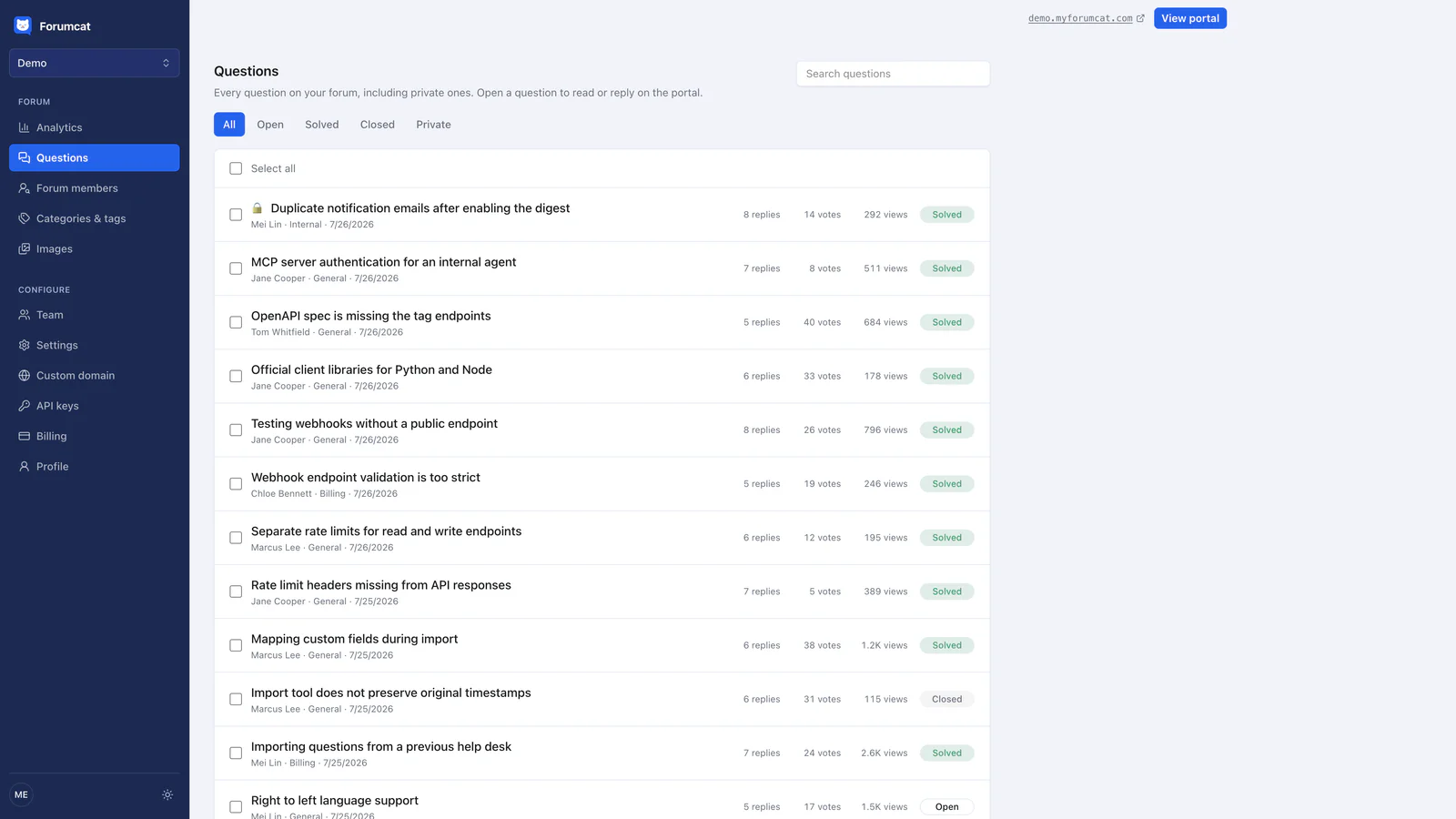
Week two is this list, oldest first, until it is empty.
Week three, fix the small things
Week three is for changes that cost nothing and break nothing.
- Rewrite bad thread titles. A title should use the words a customer would type into search. A title like "Billing issue 3" helps nobody.
- Merge or hide categories nobody uses. An empty category tells visitors that the place is unused.
- Link the guidelines page from somewhere people actually look, such as the forum header or the posting page.
- Write the five questions from your week-one list that still have no public answer.
Those five answers are the real work of the week. Post each question in the customer's words. Write the answer. Mark it accepted. That is the same method as seeding a new forum with your own questions, used on a forum that already exists.
If new members currently arrive to nothing, a short greeting thread is another cheap fix. There is more on what to put in a welcome post for new members once the answers are done.

Tidy the categories in week three, not week one.
Week four, write down the routine and the numbers
Week four turns the first three weeks into something repeatable.
Start with the routine. The routine is what you do each day, in what order, and how long it takes. Write down who covers it when you are away. A small forum needs about 15 minutes a day, and the daily routine for a customer community sets out that order. If the forum is a side duty for you, how to moderate a forum part time covers the same work in less time.
Then pick four numbers and record them. How many threads have no reply. How long a first reply takes. How many questions were asked this month. How many support replies linked to a public thread.
Call this month your baseline. A baseline is the first measurement, the one later months are compared against. Write the four numbers on one page with today's date. A number you can compare next month is worth more than a longer report nobody reads.
If you use Forumcat, three screens cover most of that. The questions list shows every question with its status. The members list shows who has posted. The analytics page shows question and view counts for a period. Five roles exist (owner, admin, agent, finance, member), so a new manager can get moderation rights without billing access. There is no reporting export and no connection to your analytics tool, so the baseline is a number you copy onto your own page by hand. A hosted support forum on a Forumcat subdomain is $9 one time, with a 7-day free trial and no card.
What to leave until day 30
Some work is good work, later. None of it helps a forum that still has unanswered threads.
Leave a rebrand. New colors do not answer a question, and the redesign will eat the month.
Leave gamification. Gamification means points and badges for posting. Rewards need a crowd, and you do not have a crowd yet.
Leave a member program. A member program names your best contributors, and in week two you do not know who they are.
Leave an events calendar. An event needs people who already show up, so it comes after the answering habit.
Leave a platform move. Moving tools in month one breaks the links you have, before you know what is actually missing.
Leave the strategy document. Write it in month two, when your four numbers are real.
How to tell month one went well
A good first month looks quiet. Nothing dramatic happens.
Every thread has a reply. You know the top ten questions by heart. Three regulars know your name and you know theirs. Four numbers sit on a page with a date on it.
Nothing was rebranded. No categories were rebuilt. No one launched a program. That restraint is the result of the month.
If one of those is missing, it is the first job of month two. Then compare the same four numbers at the end of it.
Keep reading: the daily routine for running a customer community and how to build a customer community.